



Documentary Lab Opens | The Gravity of Humanity
In 2021, the documentary *The Wanderer: A Film About Anthony Bourdain* chronicled the life of the late renowned chef. In the latter half of the film, viewers hear Bourdain reading an email he wrote to his artist friend David Cho, which sounds like a heartfelt confession at the end of his life. The tone is natural and his voice carries a sense of world-weariness, leading many to believe it was a recording made during Bourdain’s lifetime. However, this monologue was actually generated by AI after it had learned Bourdain’s speech patterns.
In 2020, for the documentary *Welcome to Chechnya*, directed by David France, 22 volunteers were recruited to protect the safety of those being filmed. Using deep learning AI, the volunteers’ facial features were “grafted” onto the faces of fugitives facing death threats. The AI preserved subtle muscle tremors, tear tracks, and the glint in their eyes—even the twitching at the corners of a young man’s eyes as he spoke of his family’s betrayal. Even though skin tones and facial features were altered, the footage still conveyed the authentic tremors of life.
While generative AI has thrust documentary ethics into the spotlight, plunging people into “digital illusions” where truth and fiction are indistinguishable, *Welcome to Chechnya* used “fabrication” to achieve “authenticity.” Under a transparent agreement, viewers voluntarily crossed the threshold of “falsity.”
This crisis extends beyond the screen. Every day, we open our phones and are unconsciously swept up in a torrent of information on social media, podcasts, and short videos, driven to take sides, pass judgment, and vent our emotions. We imagine we control the world, yet we quietly surrender the initiative of our own thinking.
How can we lift the veil of information, demystify the world, and fulfill the quest to document and seek out the truth?
In the game *Escape from the Cube: Four Seasons*, players find themselves in a springtime room set in 1964 right from the start—bright, clean, and simply furnished. There are no contextual explanations, no objectives—the only clear instruction comes from the medium itself: click, combine, experiment. It’s like a metaphor—in a wilderness where meaning is suspended, the system grants us the only verifiable form of interaction: simply entering the scene, maintaining action and inquiry, so that understanding may eventually arrive.
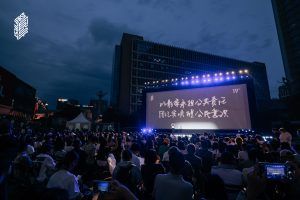
Our reality is increasingly resembling this room without instructions, plunging us into a blind interaction that feels like a puzzle game.
One day, walking down a street, I passed a tree that had been cut down, its roots exposed—just large enough for a person to stand on. The moment I stepped onto it, I felt as though I had become a tree myself, and in that instant, I shed my sense of guilt. The flickering lights nearby, the sounds in the distance, the sun between the buildings, the steel framework of the bridge, the glint on the water, the coarse particles in the air—writers, poets, food delivery drivers, laborers, friends and family, street cleaners… Only when we focus our gaze on these tangible, real people and events, and reach out to touch them once more, do we seem to find confirmation.
Perhaps “reality” is not objective evidence, but rather an “honest” narrative. It stems from the creator’s honesty toward themselves and their most instinctive empathy. Whether through documentation, performance, or reconstruction, documentary filmmaking is fundamentally a human endeavor that cannot be separated from the creator’s life experience—those unique ways of observing, engaging with, and understanding the world are the ultimate answers captured on film.
This resilience of “presence” is being continuously embodied by the creators gathered at the Documentary Lab. Following Chen Deming’s *Never* last year, director Chen Dongnan’s *Whispers in May* has once again represented Chinese-language documentary cinema in winning the DOX:AWARD, the top prize at the Copenhagen International Documentary Film Festival (CPH:DOX). Originating from the co-creation project *Secrets of May* between the Documentary Lab and Edition, this work uses the lens to delve into a coming-of-age story. After its short-film premiere at the 16th edition of the festival, it continued to grow and transform within the subtle folds of female growth and secrets, ultimately culminating in *Springtime Wanderings*, which marks yet another milestone in the international narrative of Chinese-language documentary filmmaking. It also represents a generation of filmmakers who steadfastly hold onto their cameras amidst the undercurrents, upholding and reclaiming the spirit of cinema no matter how challenging the circumstances.
In *Welcome to Chechnya*, after successfully escaping and securing a safe identity, one interviewee decides to no longer hide. The director uses special effects to make the “digital veil” slowly fade away like melting ice, revealing his true face. Thus, “truth” is no longer a static concept, but a dynamic process of reclaiming sovereignty.
In the end, everything gives way to the dignity of life, to the gravity of the human spirit.
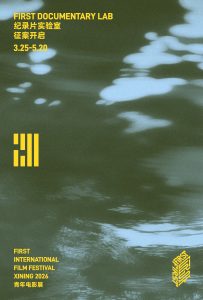
Applications for the 10th edition of the FIRST Documentary Lab are now open, with a deadline of May 20. This edition continues to feature two tracks: “Developing Projects” and “Rough Cuts,” inviting submissions of documentary and non-fiction works at various stages of development, across different genres and mediums. Click “Read More” at the end of this post to visit the FIRST website for detailed guidelines and to apply.