



Industry Screening Now Open | Don’t Jump to Conclusions
In 1982, *Blade Runner* was released. At a time when mainstream audiences still expected science fiction to deliver heroic epics and heartwarming spectacles, the outcome of a film that was intensely oppressive, damp, slow-paced, and anti-heroic was predictable. With box office receipts of less than $42 million against a production budget of $28 million, coupled with mixed reviews from critics, the result was clear.
With the rise of home video and cult culture, and Ridley Scott’s persistent efforts to release the Director’s Cut, the sluggish yet tenacious power within this work was gradually unleashed—the “near-future” Los Angeles it constructs is not merely a stack of neon lights, fog, and technological illusions, but a preview of a future cultural landscape, collectively laying the visual foundation for cyberpunk.
Some works, precisely through shifts in time, context, and viewing practices, gradually reveal their true weight.
At the 2025 industry screening, *DB* returned here following *The Song of the Tapir*: the same packed house, the same director handing out beer at the door, the same laughter echoing inside and outside the screening room. Not long after, the film was “released” on Baidu Netdisk, and director Zhang Shuai shared short reviews one after another on his WeChat Moments. It did not follow a more conventional path forward, and beyond the screening venue, it continued to resonate with a different kind of echo—one that was not particularly lively, yet undeniably real.
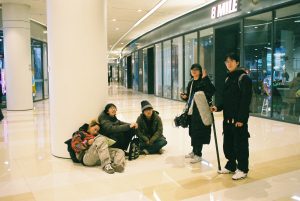
The “release” of *Rural Knight* was no different. During that phone call discussing the film’s excessive runtime, Director He Yaxiong, after a long silence, replied with just one sentence: “Let me show it in its entirety; I don’t care which screenings.” It wasn’t about winning or losing, nor was it about making a spectacle; he simply wanted a film to reach its destination in its entirety, in the darkness. Under the sun of Xining, his family shouted their hearts out, becoming Don Quixote-like knights both inside and outside the film: knowing full well the windmills were massive, they still stubbornly pressed forward.
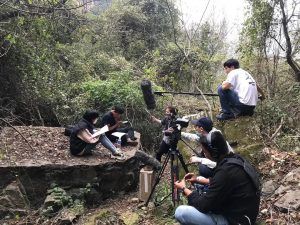
*The Silent Water Monster*, which received a Special Mention from the jury at the Film Market Honors Night, eventually found the voice director who could help it “speak properly,” thanks to director Han Guozhen. On the night of the reshoots, several people who had previously been scattered across different projects and stages of production came together again because of the unfinished story of this film. On that winter night, they formed a temporary yet effective community on set, helping the film complete its final expression.
*Like Father, Like Mother* is set to premiere on April 4—this lighthearted exploration of farewell, following director Yan Wenxin’s long process of self-reflection, is finally ready to meet its audience. In a pre-screening discussion, Cao Yiwén, director of *Madness*, joked that she had originally intended to put a temporary halt to her work on the film due to exhaustion; yet, amid the rapid advancement of AI technology, she soon began making significant revisions to the film. A film does not truly end with a temporary “completion”; rather, within new real-world contexts, it gains a renewed necessity to be questioned and recalibrated.
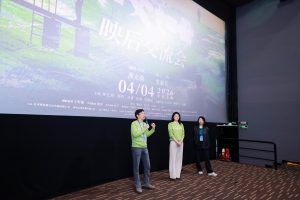
While traveling to discuss distribution for *As Long as There Is Breath*, director Chen Junlin and producer Shi Yi quietly began preparing their next project; following the film festival, director Cui Xiwei of *AI Can Pierce the Clouds* completed her new work with astonishing efficiency and polish; Director Xia Mengyi of *My Dearest* ventured deep into communities across the United States with her Super 8 camera, while also continuing to capture footage throughout Europe. Amid the complex realities of female friendship, reproductive choices, and bodily autonomy, she continues to construct her documentary framework on intimacy and the fate of those in foreign lands; Che Yi-cen, director of *The Situation Is a Bit Complicated*, shouldered her camera and headed to the Cambodian border to document the everyday life that persists even amidst moments of life and death.
Of course, there are many more works that have not been documented here, and they continue to seek their own paths forward within their respective times, trajectories, and the cracks of reality. A film does not automatically have a next step the moment it is “completed.” It may be released, or it may be shelved; it may be met with acclaim, or it may quickly fade into silence. Along with our advancing age, our cinematic experience is also the first to grow old. What we lose is not just patience, but also a certain ability to pause for a moment in the face of the unknown. Film is no longer a broad, public form of cultural consumption; it has gradually become a more deliberate, cautious, and value-driven choice.
In 1952, when *Sight & Sound* first held its “Top Ten Films of All Time” poll, not a single Hitchcock film made the list; this remained the case even four years after *Vertigo*’s release. It wasn’t until 1982 that the film first appeared on the list; by 1992, it had risen to fourth place, and by 2002, it had leaped to second.
Attempting to measure every cultural work against the yardstick of supply and demand is a misinterpretation; true creativity often remains out of step with its era—it either lingers and wanders within outdated contexts, or attempts to scale the walls of reality to embark on a transcendental adventure. It is not only cinematic masterpieces like *Blade Runner* that are “out of step with the times”; perhaps films that are raw, fragile, or even carry a sense of “imperfection” are also “out of step.” Yet the reason they are still worth casting into the waters is not because they are destined for greatness, but because their fate has not yet been exhausted by a single gaze.
So, we’ve invented a little tool called the “Anachronism Index.” It is a sincere measurement: setting aside hasty judgments of success or failure, we look to see where a film remains stubborn, clumsy, and unwilling to back down.

What truly makes a work worth seeing includes those aspects that have not yet been fully assimilated by established standards. In an era where everything demands immediate reactions, instant categorization, and instant gratification, we should allow a film to retain its raw, unpolished quality—to let conclusions come a little later, to keep judgment closer to the work itself, and to give those films that might otherwise be quickly overlooked the chance to be watched with genuine attention.
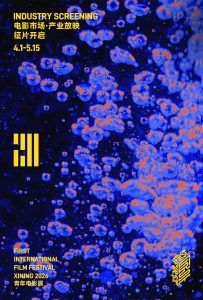
Starting today, the call for entries for the 20th FIRST Film Market & Industry Screenings is officially open. The deadline is May 15. We welcome everyone to visit the FIRST Youth Film Festival website to view the guidelines and complete the application.
References:
Scott, *Blade Runner* (1982)
BFI, *Forever Falling: What Makes Vertigo Great* (2012)